

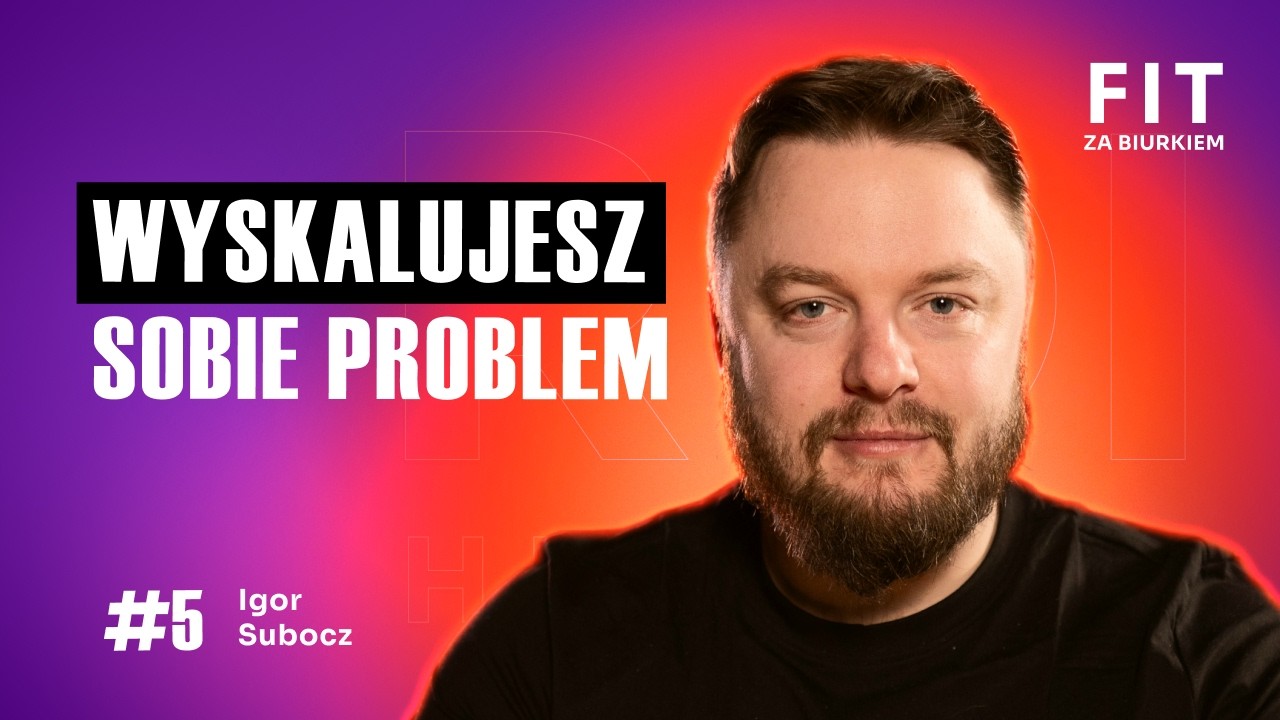
Why does keeping underperformers destroy the best people on your team?
Firing employees and managing a team most often derails a company not due to a lack of knowledge, but by delaying decisions and trying to "save" people at the expense of one's own well-being. In this episode, Igor Subocz states directly: when you've already thought "I don't want to work with this person," the decision has been made — everything else is just losses.
Firing employees and managing a team often derails a company not because of a lack of knowledge, but because of delaying decisions and "saving" people at the expense of one's own life. In this episode, Igor Subocz states directly: when you already have the thought "I don't want to work with this person" in your head, the decision has been made — anything else just leads to losses.
WHAT YOU'LL LEARN IN THIS EPISODE
- How to recognize the moment when delaying a dismissal harms everyone (including the person being dismissed)
- Why boundless empathy turns a company into a parent-child relationship and erodes efficiency
- How to build an adult-to-adult culture: "problem + proposed solution," not "something broke"
- Why Igor stopped focusing on working hours and now focuses on outcomes, not "120 hours"
- How to recruit for mindset and why skills are secondary (an A-player can be a junior)
- How remote work helps cut off "non-projects" and distractions (and when it's a personal decision)
- What "excavator vs. shovel" means in AI/NoCode and how not to scale a bad process
- Why in 2026 distribution wins, not just the product (and why relationships are your primary distribution channel)
This is a conversation about how to run a service company without romanticizing the "grind." Igor demonstrates that in a team, responsibility, transparency, and autonomy are crucial — especially in a remote model. He presents specific mechanisms: "fire fast, hire slow," the litmus test "would I hire this person again," and the communication rule: come to your boss not just with a problem, but with solution options and a deadline.
There's also a significant point about building a community (NoCode Poland) as a real distribution channel: a casual format, approachable interactions, practitioners engaging directly — without the usual conference theatrics.
Igor Subocz — founder of zu.agency and co-founder of NoCode Poland. He builds companies and communities based on relationships, responsibility, and delivering results, not on "showing off the office" and overworking.